
Dr. Hussain’s five tips to heart safety and heart disease prevention
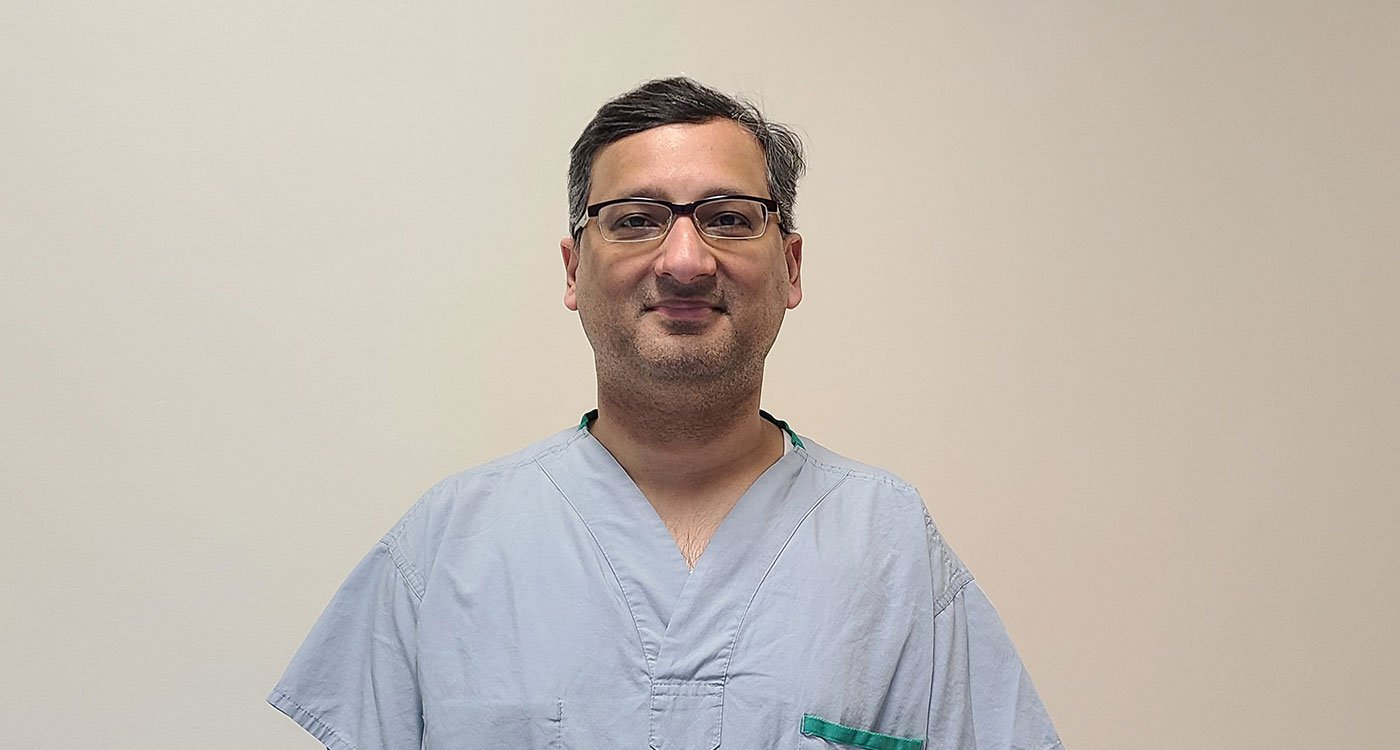
Dr. Farrukh Hussain, MD, FRCPC is the Physician Lead for the Cardiac Cath Labs at William Osler Health System (Osler). He completed his medical degree, postgraduate internal medicine and cardiology training at the University of Toronto. Dr. Hussain also completed a clinical fellowship in interventional cardiology at University Health Network’s Toronto General Hospital.
Each year, more than 60,000 Canadians suffer their first heart attack.1 William Osler Health System’s Dr. Hussain shares his tips to keep your heart healthy and to help prevent heart disease:
Choose a heart-healthy diet
Be kind to your heart and consider a Mediterranean or plant-based diet that incorporates (if you are not allergic) more vegetables, berries, nuts, fish, olive oil, whole grains, beans, chickpeas and lentils into your diet daily. Avoid sugary drinks and foods, refined carbohydrates, meats, saturated fats, fried foods, packaged foods and processed foods. Eating a well-balanced diet will provide your heart and body with lots of needed antioxidants, vitamins, minerals and fibre.
Quit smoking and vaping
Smoking increases your risk of developing heart disease as the chemicals in tobacco can damage the heart and blood vessels and lead to lower oxygen levels in your blood, increased blood pressure and heart rate. The good news is that the risk of heart disease starts to drop as soon as a day after quitting smoking and/or vaping. No matter how long or how much you smoked, you'll see the benefits as soon as you quit. Learn more about the many supports available.
Know the signs of a heart attack
A heart attack can often mimic common mild health issues like indigestion or muscle cramps, so it is important to know the signs. Watch for chest discomfort (pressure, squeezing, fullness or pain, burning or heaviness), upper body discomfort, shortness of breath, sweating, nausea and/or light-headedness. If you experience any of these signs, call 911 immediately.2
Know your heart attack risks
Household chores like shovelling snow, vacuuming, cutting grass and gardening can increase your risk of a heart attack. Always start slow, complete your chores in moderation, and remember to stop immediately and call 911 if you experience the signs of a heart attack. Remember to ask your family doctor to screen you for heart attack/disease risk if necessary.
Hands-Only CPR
Hands-Only CPR could save a life. Hands-Only CPR involves chest compressions by pushing hard and fast on the centre of the chest, at a rate of at least 100 times per minute. It is a potentially lifesaving option that can be used by people not trained in conventional CPR. Learn more about CPR training.
Keeping the public in the know
Sign up for the Inside Osler newsletter
Get the latest on what's going on at Osler and how it affects the community around us.